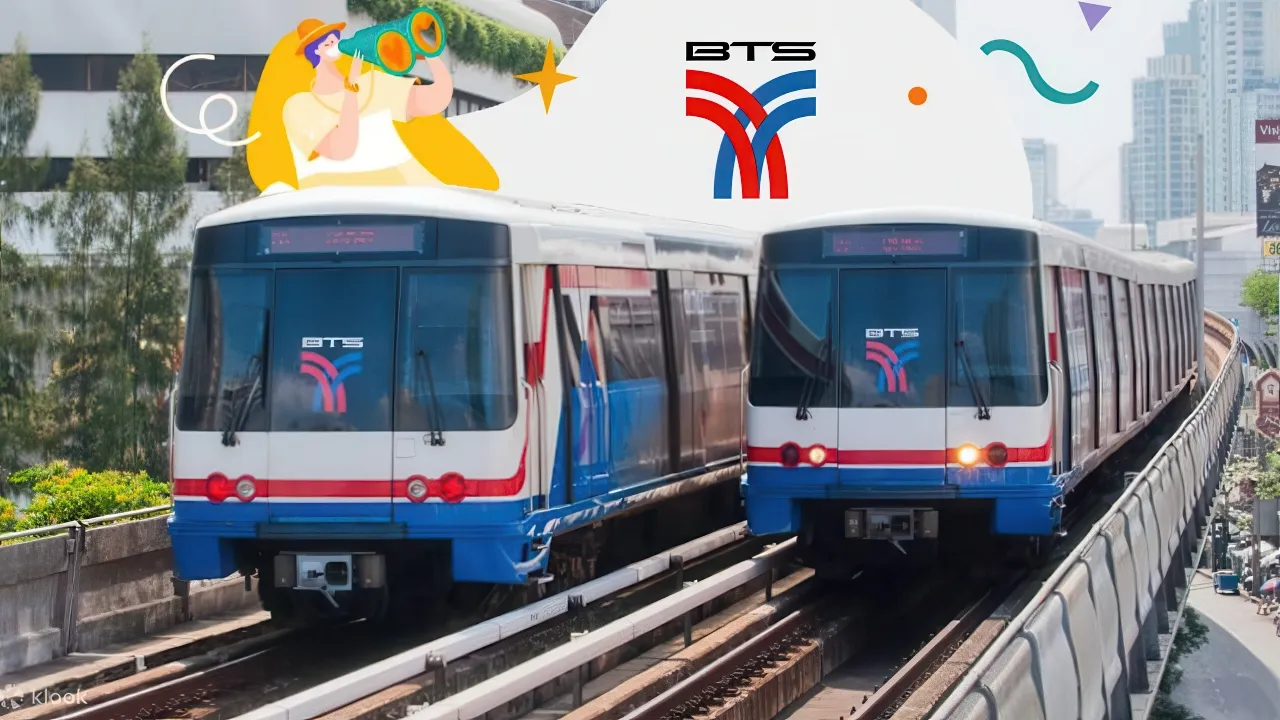
The BTS Skytrain in Bangkok is the city’s most convenient way to beat traffic and explore the Thai capital. Since its opening in 1999, this modern elevated rail system has become the backbone of Bangkok’s public transport, carrying millions of passengers every month.
With fast trains, affordable fares, and seamless connections to the MRT subway, airports, shopping malls, business hubs, and top tourist attractions, the BTS makes getting around Bangkok simple and stress-free.
In this guide, you’ll find everything you need to know about the BTS Skytrain, including:
Overview of the BTS Skytrain Bangkok System
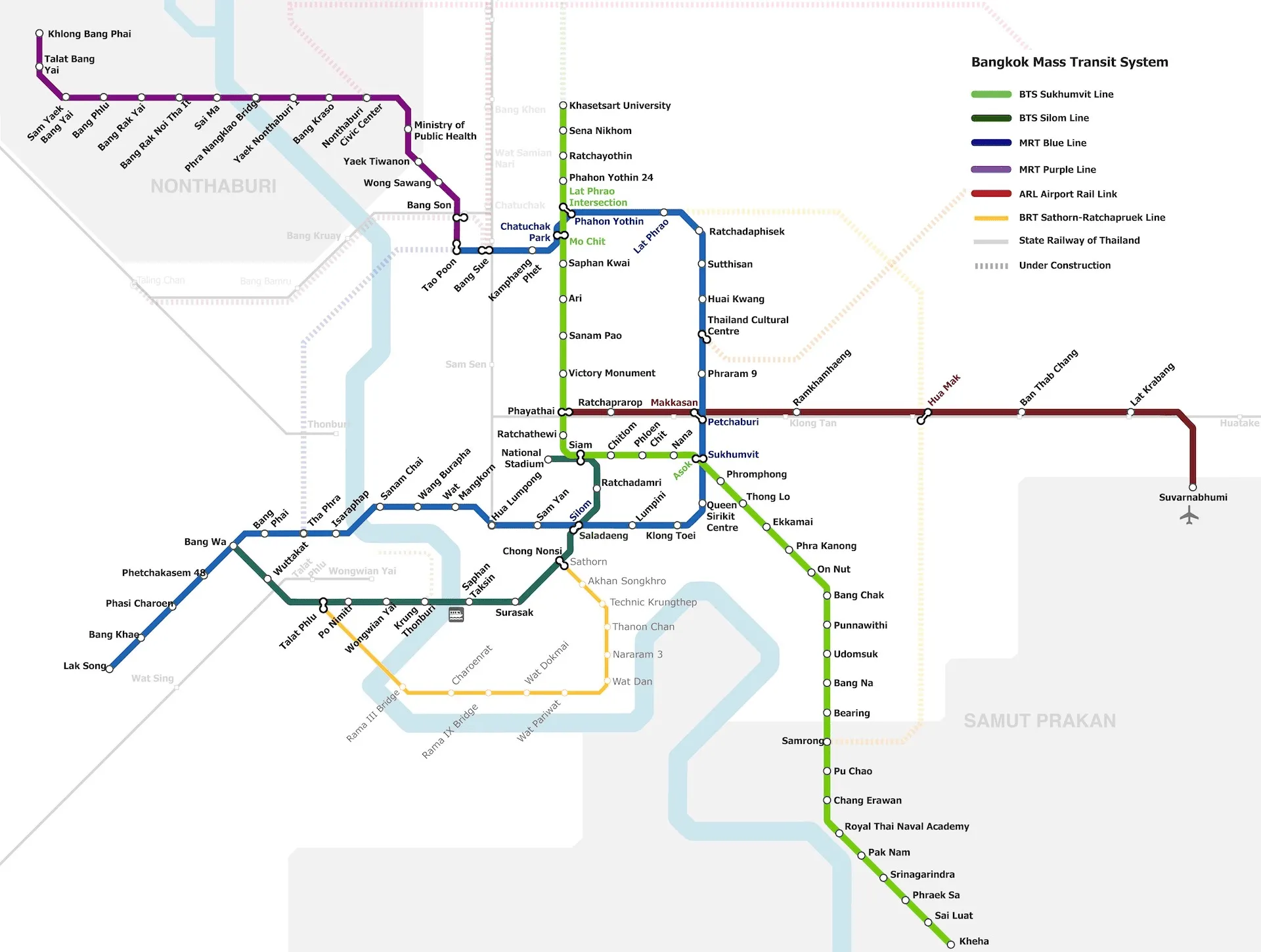
The BTS Skytrain Bangkok operates across three lines:
- 🚈 Sukhumvit Line – connects northern Bangkok with the east, covering major residential and business areas.
- 🚉 Silom Line – serves central Bangkok and extends to the riverside.
- 🌉 Gold Line – a short automated extension linking the Silom Line with ICONSIAM.
Bangkok’s wider rail system also includes MRT-operated lines – the Blue, Pink, Purple, and Yellow Lines – which connect with the BTS at key interchange stations. (These MRT lines will be covered in a separate article.)
BTS Skytrain Quick Facts
| Feature | Details |
|---|---|
| Operating Hours | 06:00 – 00:00 daily |
| Frequency | 3–6 min (peak) / 6–10 min (off-peak) |
| Languages | Thai, English & Chinese signs/announcements |
| Call Center | +66 (0) 2617 6000 |
BTS Skytrain Lines and Connections
Sukhumvit Line (Light Green, opened December 1999)
Running from Khu Khot in Pathum Thani to Kheha in Samut Prakan, this is Bangkok’s primary north-south transit corridor. Key stops include:
- Mo Chit – near Chatuchak Weekend Market, connects to MRT Blue Line
- Victory Monument – minivan hub for for regional travel
- Asok – direct link to MRT Sukhumvit, access to Terminal 21 shopping
- Phrom Phong – EmQuartier, Emporium, Emsphere and Benchasiri Park
- On Nut – up-and-coming residential district
- Bearing to Kheha – expansion into eastern suburbs and Samut Prakan
Silom Line (Dark Green, opened December 1999)
Connecting National Stadium (near MBK) to Bang Wa, this line serves the city center and western Bangkok:
- Siam – major interchange between BTS lines, Siam Paragon and MBK
- Sala Daeng – links to MRT Blue Line (Si Lom) and the Silom business area
- Saphan Taksin – river access via Chao Phraya River boats
- Wongwian Yai – gateway to Thonburi neighborhoods
Gold Line (Opened 2020)
This short automated people mover connects Krung Thonburi Station (Silom Line) to ICONSIAM, Bangkok’s iconic luxury mall and riverside development. Though only three stations long, it’s a key connection for ferry terminals and river access.
Tickets, Fares, and Cards
- Single Journey Tickets: Available from vending machines or ticket counters (cash only)
- Rabbit Card: Rechargeable card that allows quicker entry and exit
- One-Day Pass: Unlimited rides 24 hours; ideal for heavy travel
- Contactless Payments: Visa/Mastercard accepted at most stations, also for tap-in/tap-out entry
Fare Range
- Typically between THB 16–59, depending on distance
- Children under 90cm travel free
Accessibility and Station Facilities
Most stations are equipped with elevators, escalators, and wheelchair-accessible gates, although a few older stations may still present challenges. Platforms feature priority seating zones, and station staff are typically on hand to assist.
Inside the trains, the carriages are air-conditioned and kept pleasantly cool, offering welcome relief from Bangkok’s heat. The environment is typically quiet, as talking on phones or speaking loudly is discouraged — especially during commuting hours. This makes the BTS one of the more peaceful public transport options in the city.
Top Places Accessible via BTS
| Destination | Station | Notes |
|---|---|---|
| Chatuchak Market | Mo Chit | Massive weekend market, links with MRT |
| ICONSIAM | Gold Line from Krung Thonburi | Luxury mall on the Chao Phraya River |
| Terminal 21 | Asok | Themed mall; easy MRT interchange |
| Siam Paragon & MBK | Siam/National Stadium | Bangkok’s top shopping zone |
| Benjakitti Park | Asok or Nana | Green space near Sukhumvit |
| Chao Phraya Ferries | Saphan Taksin | Riverside boat piers and heritage sites |
Connecting Transportation Modes
Bangkok’s transport system works best when the BTS Skytrain is combined with other options. Here’s how the BTS connects to the rest of the city:
- 🚇 MRT Metro – Links to districts like Ratchada, Chinatown, and Tao Poon at key interchange stations.
- 🚈 Airport Rail Link (ARL) – Direct connection to Suvarnabhumi Airport via Phaya Thai station.
- 🚤 Chao Phraya River Boats – Accessible from Saphan Taksin station, ideal for visiting temples and the Grand Palace.
- 🛺 Tuk-Tuks – Best for short rides and tourist hotspots, though fares should be agreed in advance.
- 🚕 Bangkok Taxis & Grab – Convenient door-to-door service, but often slower in heavy traffic.
- 🏍️ Motorbike Taxis – Fastest way to cut through traffic jams, especially for short distances.
- 🚌 Public Buses – Very cheap, but routes can be difficult for non-Thai speakers to navigate.
Conclusion
The BTS Skytrain is the backbone of Bangkok’s public transport, providing a fast, clean, and comfortable way to move around the city. With air-conditioned trains, reliable schedules, and direct links to major shopping malls, business hubs, and residential areas, it remains one of the most efficient travel options in Bangkok.
When combined with other transport modes such as the MRT subway, Airport Rail Link (ARL), buses, or taxis, the BTS allows for flexible, time-saving journeys — ideal for both daily commuters and visitors exploring the city.
📍 Tip: Download or bookmark the Bangkok Train System Map (BTS, MRT & ARL) to make your trip even smoother.